
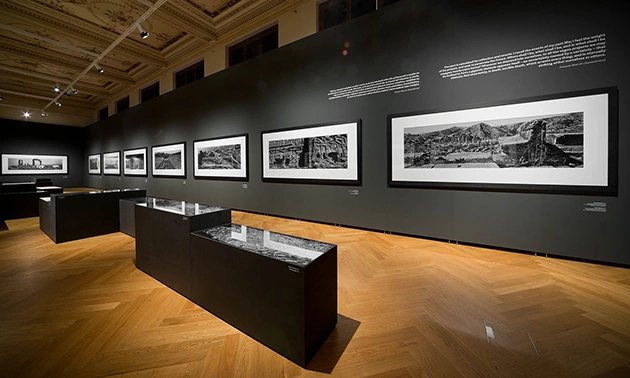
Museum of Decorative Arts in Prague
From 450 to 700 modules
Since 2017, every temporary exhibition has been created with Mila-wall – around 30 to date, each with a different floor plan and a different colour.
View referenceThe library is a unique testimony to the intellectual renewal that characterised the 14th century in Europe.
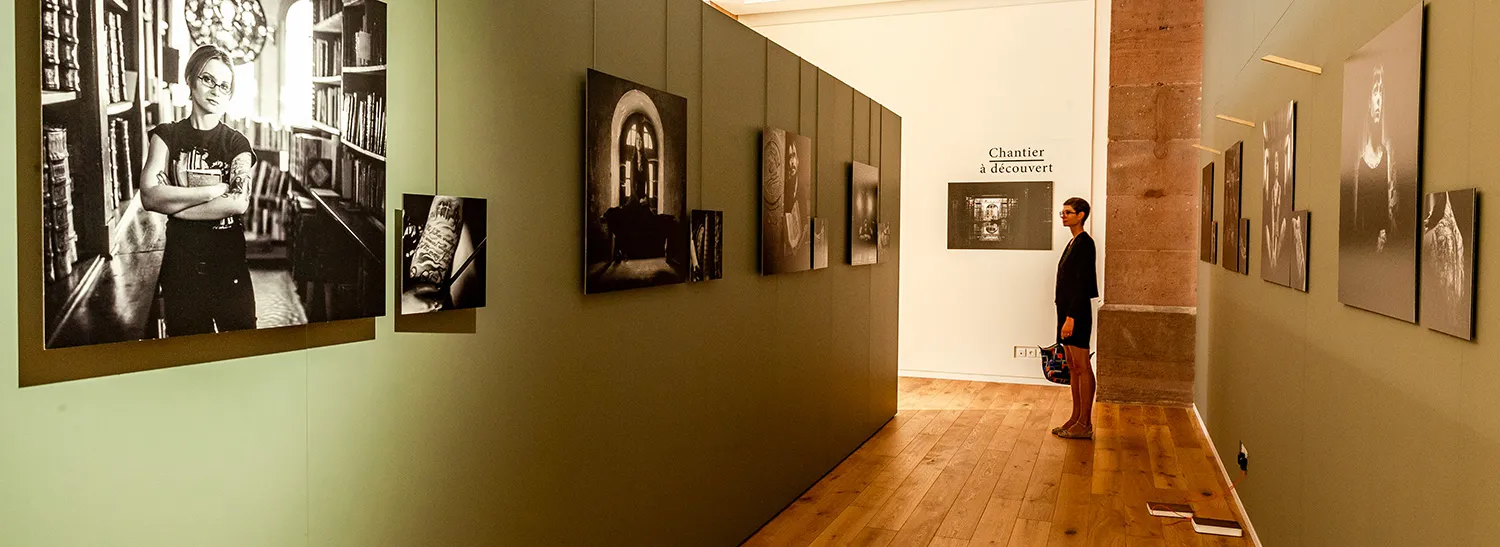
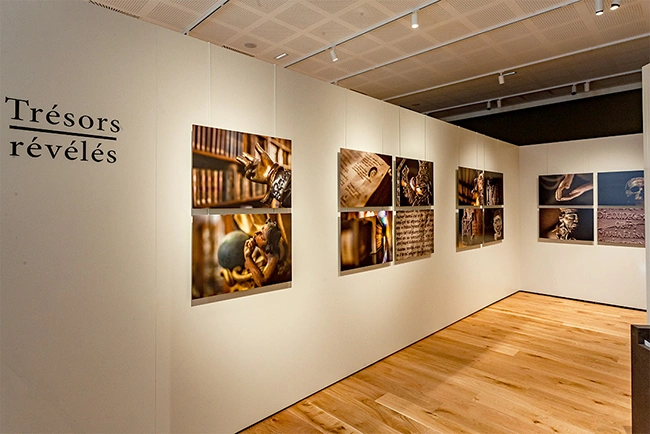
After four years of renovation, the Humanist Library in Sélestat (Schlettstadt in Alsace) reopened its doors on 23 June. The town of Sélestat benefited from its geographical location between the intellectual centres of Italy and the Netherlands.
Sélestat was also shaped by the figure of the author, writer, humanist, lawyer and friend of Erasmus Beatus Rhenanus (1485–1547), who was born and lived in the town. The library’s collection consists of the personal library of Beatus Rhenanus, supplemented by the parish library.
The Humanist Library in Sélestat currently comprises 423 volumes with 1,287 works and 41 manuscripts in various collections, plus 33 old manuscripts and 255 autograph letters. In order to present this important collection in the best possible way, the architect Rudy Ricciotti doubled the building’s floor space through extensions and restructuring, while preserving the architectural appearance of the former market hall in the townscape.
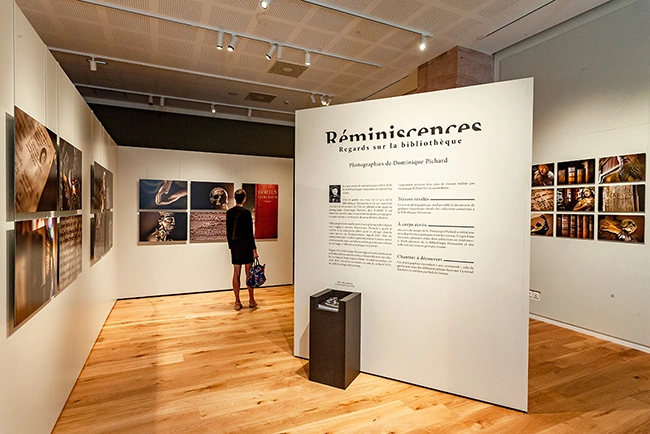
The exhibition “Réminiscences” presents photographs by Dominique Pichard, who accompanied and documented the renovation project for the library over four years.
With their clear design and modular structure, the Mila-wall modular walls from MBA France can be reused by the library in different configurations for future exhibitions. Photos: Bibliothèque Humaniste de Sélestat, copyright Roland Letscher / MBA France
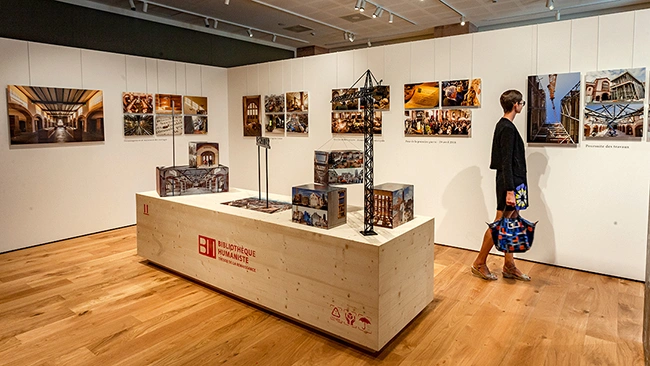
From 450 to 700 modules
Since 2017, every temporary exhibition has been created with Mila-wall – around 30 to date, each with a different floor plan and a different colour.
View reference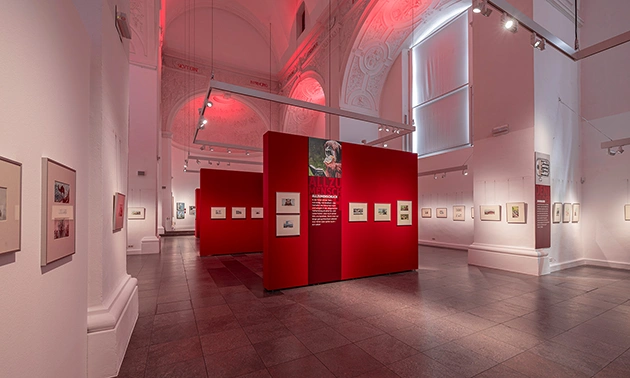
54 walls, 3 metres, red
54 modular walls and 24 corner profiles transformed the historic nave into an exhibition space – without any intervention in the building.
View reference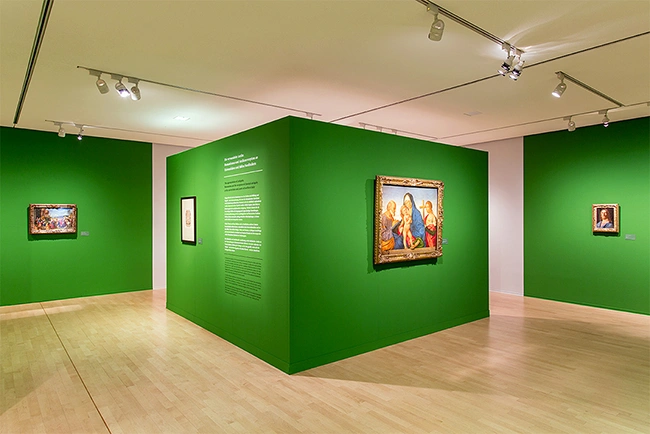
In use since 2004
The Collection of Prints, Drawings and Photographs has been rearranging its modules for two decades – repainted more than fifty times.
View reference